Human Behavioral Neuroscience Lab
Studying memory, motivation, and clinical behavior through virtual reality

What We Study
Learning & Memory
Human analogues of classic behavioral neuroscience paradigms.
Clinical Neuroscience
Research on schizophrenia, PTSD, substance use disorders, Alzheimer’s disease, and related clinical populations.
Brain & Behavior
Combining behavioral testing with fMRI, TMS, ECG, GSR, and other psychophysiological methods
Why Virtual Reality?
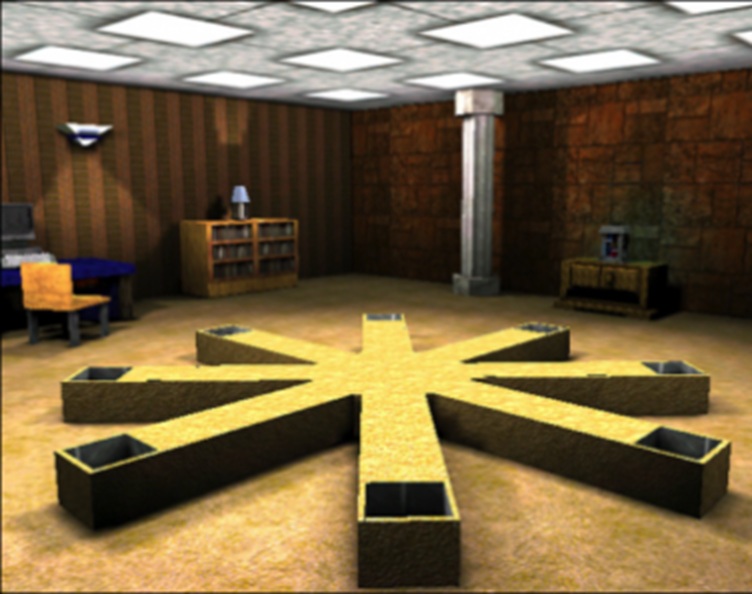
Virtual environments allow us to translate classic animal-learning paradigms into controlled human experiments. By adapting tasks such as spatial navigation, conditioned place preference, and reward learning for immersive environments, we can study memory, decision-making, and motivation with experimental precision while maintaining ecological validity.
Our virtual tasks provide human analogues of classic behavioral neuroscience paradigms while preserving both experimental control and real-world relevance.
Methods We Use
Virtual Reality
Spatial Navigation
Conditioned Place Preference
Fear Conditioning
Psychophysiology
Electrodermal activity
Electrocardiogram
Conditioned fear
Brain Imaging
functional Magnetic Resonance Imaging (fMRI)
Transcranial Magnetic Stimulation (TMS)
Event-related Potentials (ERP)
Selected Research
Virtual Reality Reward Learning
Human models of alcohol, nicotine, cannabis, and food reward.
Nicotine and Human Learning
Effects of nicotine on conditioning, fear learning, and reward.
Cannabis and Vaping Cues
Cognitive biases associated with cannabis and e-cigarette use.
Hormones and Spatial Memory
Individual differences in learning and memory across women.

Meet Our Team
Robert S. Astur, PhD
Associate Professor, Department of Psychological Sciences
Director, Human Behavioral Neuroscience Lab
The Human Behavioral Neuroscience Lab includes graduate students,
undergraduate researchers, and collaborators studying learning,
memory, motivation, and clinical behavior using virtual reality,
neuroimaging, and psychophysiological methods.
Interested in our research?
Contact us to learn more about current projects and opportunities.